BR · Spirit family
Read the category
Brandy preserves fruit through fermentation and distillation. The fruit, whether whole, pressed wine or pomace, determines the aromatic starting point. A label may identify a broad category such as grape brandy, a protected place such as Cognac, or a raw-material tradition such as grappa. Still choice and oak decide whether fruit stays vivid or develops spice, nuts and rancio.
How it becomes spirit
- 01Harvest fruit
- 02Press or crush
- 03Ferment
- 04Distill
- 05Rest, age or blend
Fruit is fermented and distilled; choices around pressing, lees, still type, cut points and maturation determine intensity and texture.
Common terms on the bottle
Brand language can describe law, method or simply a producer's positioning. These side-by-side definitions show what the familiar wording does—and does not—promise.
On Cognac, these are regulated age categories based on the youngest eau-de-vie in the blend. VSOP requires older stock than VS, and XO older stock than VSOP.
Fine Champagne Cognac is a blend from Grande Champagne and Petite Champagne crus, with at least half from Grande Champagne. It is unrelated to sparkling wine.
Brandy is generally distilled from wine or fermented fruit. Pomace spirits such as grappa distill the skins, seeds and stems left after pressing.
Vintage names a harvest year where the category permits it. An age designation communicates maturation class or minimum age without tying the contents to one harvest.
Regional names found on labels
Cognac
Protected grape brandy from the Cognac delimited region.
Armagnac
Protected brandy commonly associated with continuous Armagnac stills.
Calvados
Protected cider or perry spirit from defined Norman areas.
Grappa
Italian grape-marc spirit: the raw material is pomace, not wine.
Pisco
Two distinct national denominations with different permitted methods.
Singani
Bolivian denomination for grape spirit from authorized high valleys, made from Moscatel of Alexandria.
Potstill Brandy
South African class made entirely from pot-still distillate and matured in oak.
- CognacHennessy
- ArmagnacChâteau de Laubade
- CalvadosChristian Drouin
- ItalyNardini Distillery
- Pacific South AmericaHacienda La Caravedo
- Bolivian high valleysCasa Real Distillery
- Western CapeKWV House of Fire
Subtype field cards
Cognac
Protected originCognac-region wine-brandy GI defined by permitted grapes, seasonal double distillation and regional oak maturation.
French GI for wine spirit from the Cognac area, using permitted grapes and prescribed distillation and aging; label age categories refer to the youngest eau-de-vie in the blend.
Double pot distillation gives floral fruit and fine texture; long oak aging brings vanilla, spice and rancio.
HennessyCognac, France. Cognac house and maturation site.
Armagnac
Protected originGascon wine-brandy GI commonly distinguished by single distillation in a continuous Armagnac still.
French GI from defined Gascon zones with permitted grapes, production methods and aging/label terms.
Often single-distilled in a continuous Armagnac still: robust fruit, prune, spice and earthy complexity.
Château de LaubadeSorbet, Bas-Armagnac, France. Bas-Armagnac estate.
Brandy de Jerez
Protected originJerez-area Spanish brandy GI defined by local maturation, characteristically in a solera of Sherry-seasoned casks.
Spanish GI produced and aged exclusively in Jerez de la Frontera, El Puerto de Santa María and Sanlúcar de Barrameda, typically using a criaderas y solera system.
Rich, rounded and cask-led, with dried fruit, walnut and sweet spice from seasoned Sherry casks.
Bodegas FundadorJerez de la Frontera, Spain. Sherry-cask brandy site.
Pisco
Protected originGrape spirit governed by separate Peruvian and Chilean denominations with materially different production rules.
Peru and Chile regulate separate pisco denominations; grapes, geographic zones, distillation strength and maturation permissions differ, so check country of origin.
Aromatic and grape-driven; Peruvian styles are unaged, while Chilean rules permit resting or wood aging.
Hacienda La CaravedoIca Valley, Peru. Historic pisco distillery.
Grappa
Protected originProtected Italian, Sammarinese or Ticinese grape-marc spirit distilled from pomace rather than wine.
EU GI for grape-marc spirit produced in Italy, San Marino or Ticino under the registered requirements.
Pomace gives concentrated skins, seeds and floral notes; can be young and crystalline or oak-aged.
Nardini DistilleryBassano del Grappa, Veneto, Italy. Historic Italian pomace spirit producer.
Calvados
Protected originFamily of Normandy cider-and-perry spirit appellations differentiated by orchard origin and distillation method.
A family of Normandy appellations for cider/perry spirit, with rules varying by appellation for fruit origin, distillation and maturation.
Apple and pear move from fresh peel and blossom toward baked fruit, spice and leather with age.
Christian DrouinPont-l’Évêque, Normandy, France. Norman apple and pear spirit.
Fruit eaux-de-vie
Broad styleBroad family of unsweetened spirits distilled from a named fermented fruit and normally bottled without oak influence.
Usually an unsweetened fruit spirit; EU law defines fruit spirit categories, but the phrase eau-de-vie itself does not always signal one protected place.
Unaged, intensely aromatic expressions of pear, cherry, plum, raspberry or other fruit.
Rochelt DistilleryFritzens, Tyrol, Austria. Tyrolean fruit-brandy distillery.
Singani
Protected originBolivian high-valley denomination for aromatic Moscatel of Alexandria grape spirit.
Bolivia reserves the denomination for spirit distilled from fresh-grape wine, produced and bottled in authorized zones; implementing rules require Moscatel of Alexandria for the denomination.
Unaged and highly aromatic, with orange blossom, fresh grape, citrus peel and peppery floral lift.
Casa Real DistillerySanta Ana, Tarija, Bolivia. High-valley Moscatel singani distillery.
South African pot-still brandy
Defined styleSouth African class made entirely from double-pot-distilled wine spirit and matured in oak for at least three years.
South African potstill brandy is made entirely from pot-still wine distillate, double-distilled in copper and matured in oak for at least three years under national rules.
Chenin Blanc or Colombard fruit meets vanilla, dried apricot, baking spice and polished oak, usually with a fuller texture than blended brandy.
KWV House of FirePaarl, Western Cape, South Africa. Cape wine-brandy production site.
Subtype atlas
Cognac, up close
Cognac is made inside a delimited area centered on Charente and Charente-Maritime. Its six crus describe where the grapes grew. Soil, distillation choices, cellar climate, oak and blending all influence the final eau-de-vie.
Ugni Blanc
Vitis vinifera · Ugni BlancUgni Blanc accounts for about 98% of Cognac vines. Its high acidity, relatively low alcohol and disease resistance make a restrained base wine that is well suited to distillation and long maturation.
The base wine is not designed as a rich table wine; acidity and subtle aroma help it survive two distillations and years in oak.Photo · Andrew Thomas / CC BY-SA 4.0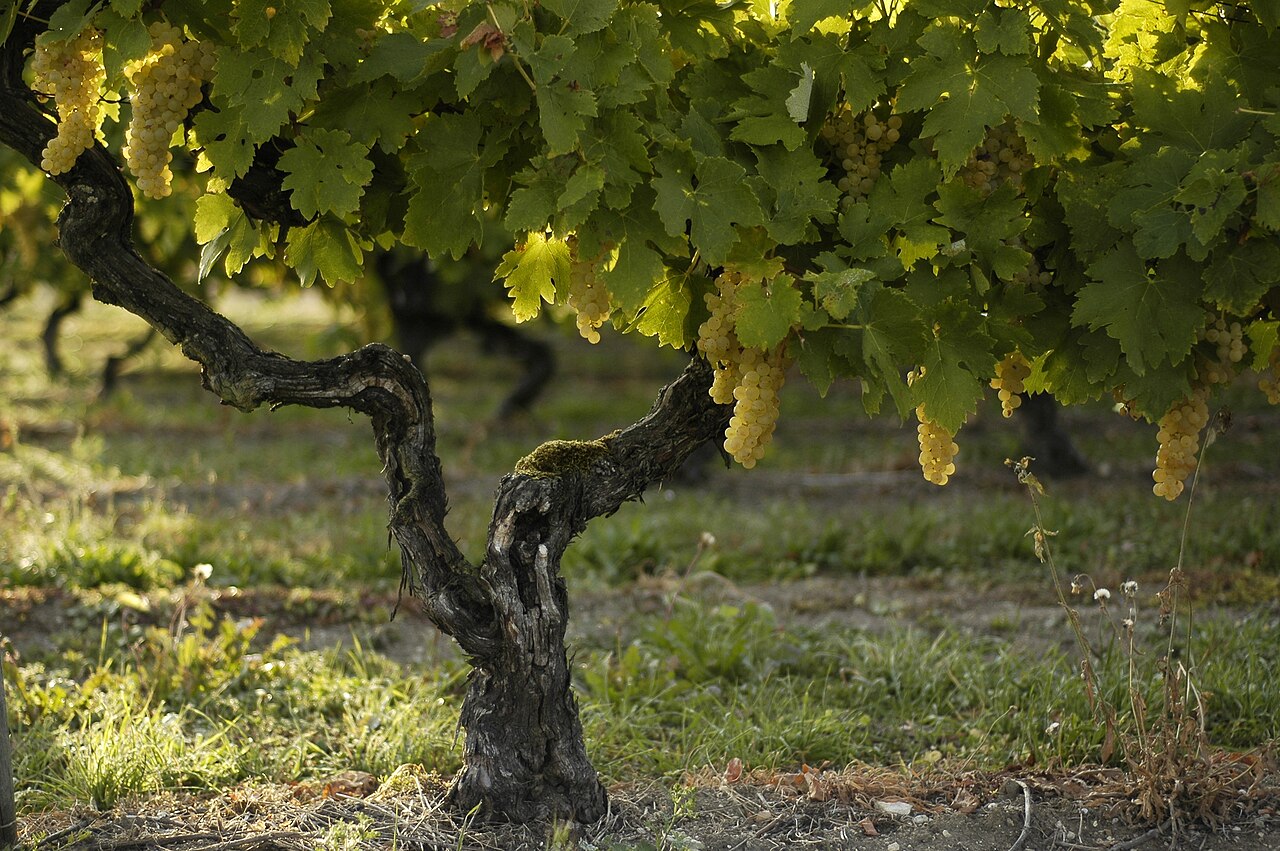
Ugni Blanc
Vitis viniferaHigh acidity, low sugar and a restrained profile make the benchmark distillation wine: delicate, floral and built to age.
Photo · Andrew Thomas / CC BY-SA 4.0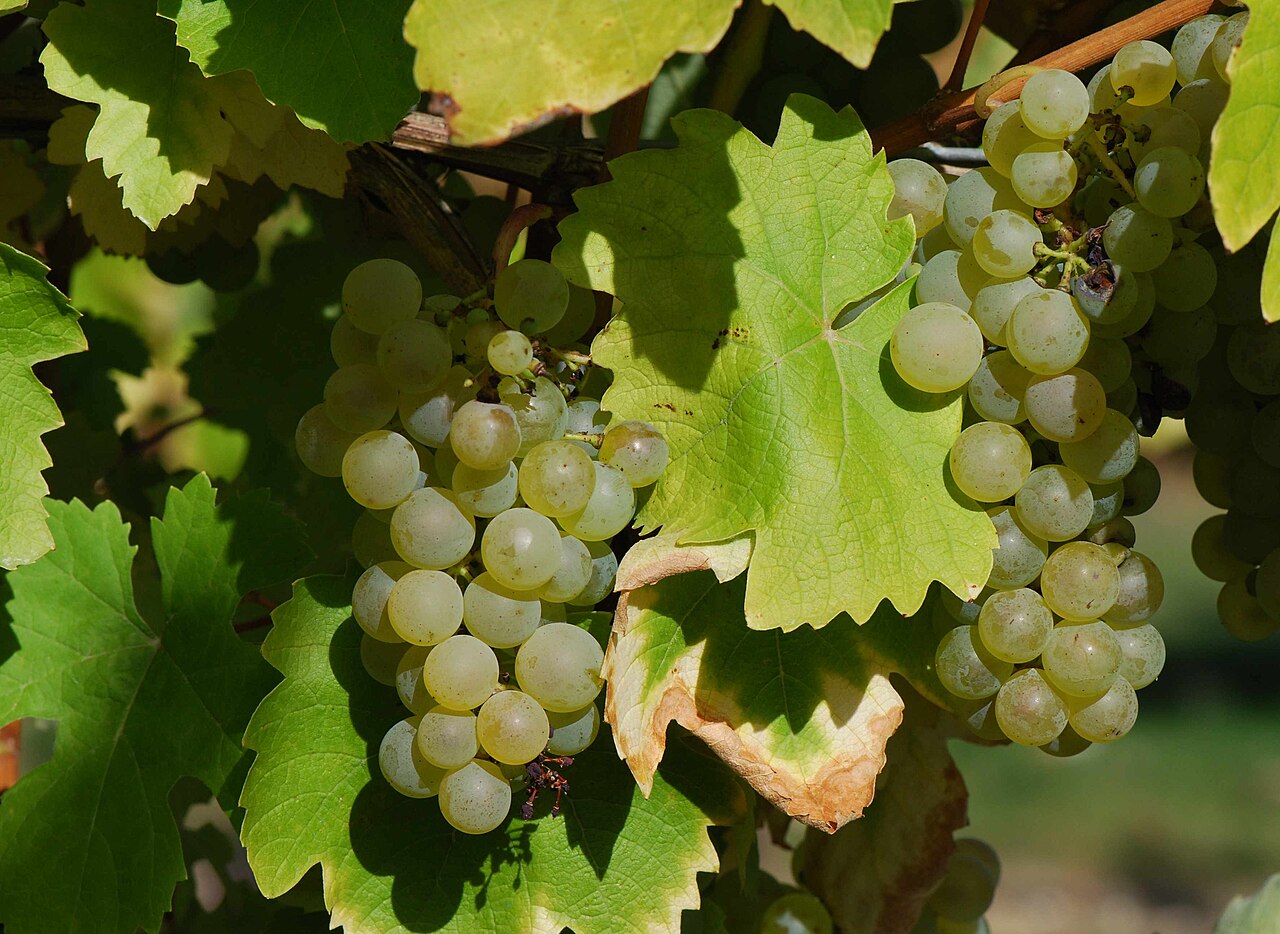
Folle Blanche
Vitis viniferaThe pre-phylloxera mainstay survives in small plantings and can give balanced eau-de-vie with vivid, powerful aromatics.
Photo · Pancrat / CC BY-SA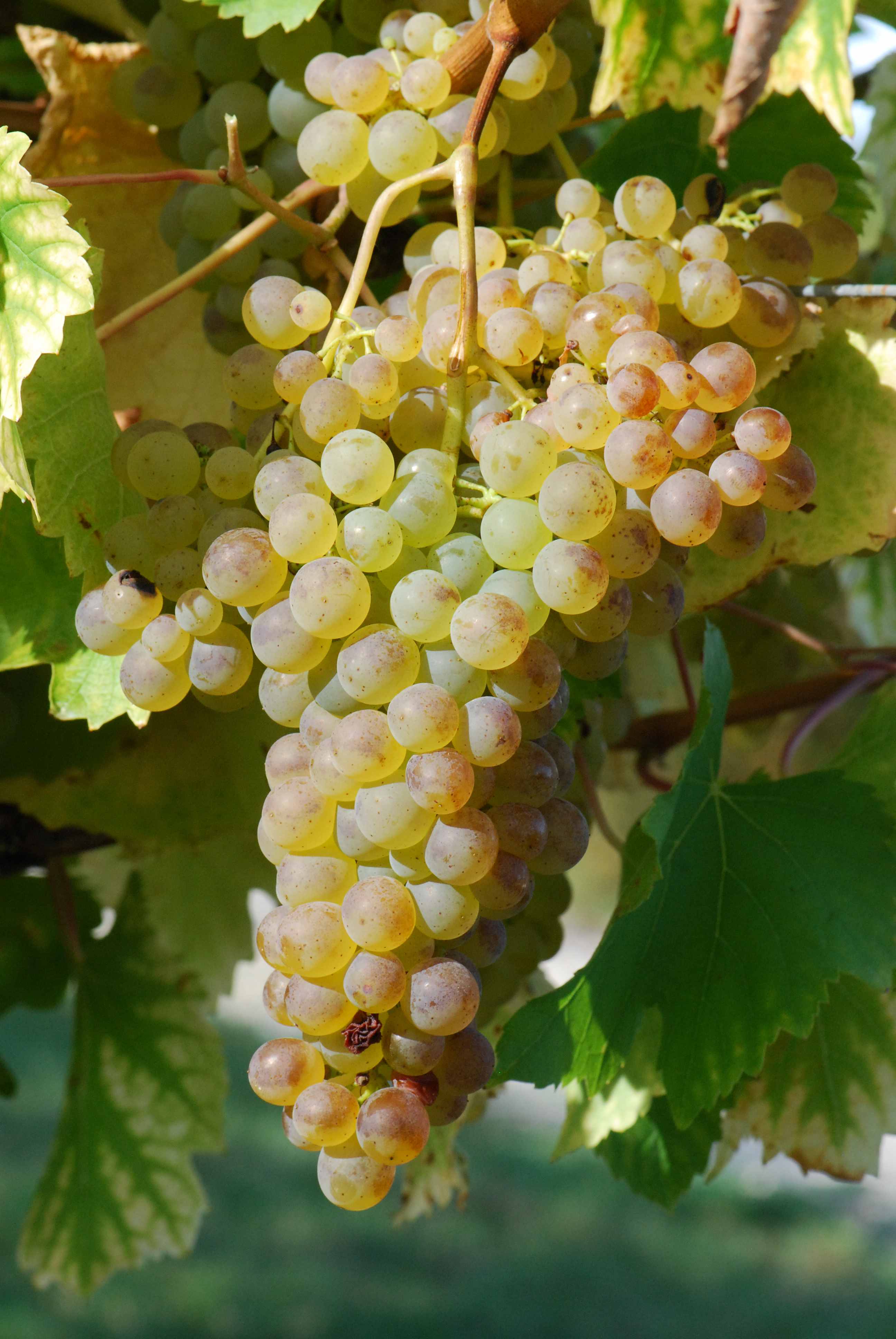
Colombard
Vitis viniferaNaturally high acidity and stronger fruit aromatics make Colombard a useful blending counterpoint to neutral Ugni Blanc.
Photo · Pancrat / CC BY-SAThe six official Cognac crus
The six boundary polygons come from INAO's current geographic-area open data. Fine Champagne is not a seventh cru: it is a blend of Grande and Petite Champagne, with at least 50% Grande Champagne.
- Grande ChampagneProtected origin
- Petite ChampagneProtected origin
- BorderiesProtected origin
- Fins BoisProtected origin
- Bons BoisProtected origin
- Bois OrdinairesProtected origin
What changes in the glass
Fine Champagne
A blend designationOnly Grande and Petite Champagne eaux-de-vie are permitted, and Grande Champagne must make up at least half of the blend.
From introductory to advanced
A four-pour route through brandy & fruit spirits. “Advanced” means more intense or information-dense—not objectively better. Start with small pours, add water where useful, and compare slowly.
01Start VS Cognac
Neat or in a SidecarA youthful blend makes fresh grape, floral lift and early oak influence easy to recognize.
02Build Calvados
Neat in a small tulip glassMoving from grapes to cider fruit reveals how clearly the raw material can survive fermentation, distillation and oak.
03Explore Armagnac
Neat; allow time in the glassSingle distillation and varied grapes often produce a broader, earthier and more textural reading of wine spirit.
04Advanced Vintage or long-aged Armagnac
Small neat pourA mature example invites attention to grape identity, oxidation, oak integration, rancio and vintage variation.
Side-by-side method
Compare brandy & fruit spirits styles
Pick two subtypes and scan the five differences that matter most.
Dry, high-acid white wine, principally from Ugni Blanc grapes.
High-acid wine from permitted grapes, often Ugni Blanc, Baco, Folle Blanche or Colombard.
Distilled twice in copper Charentais pot stills during the legally defined season.
Commonly distilled once in a small continuous Armagnac still
Aged in French oak in the region
Gascon oak is traditional
French GI for wine spirit from the Cognac area.
French GI from defined Gascon zones with permitted grapes.
Double pot distillation gives floral fruit and fine texture
Often single-distilled in a continuous Armagnac still: robust fruit, prune.
Distillery map
Explore the production sites in the brandy & fruit spirits chapter. Select a style to reduce the map, then choose a marker for its production story.
Hennessy
Cognac house and maturation siteUse the location to explore double distillation, regional crus, oak maturation and the role of blending eaux-de-vie.
- grape
- floral
- rancio