AG · Spirit family
Read the category
These spirits begin in the field. Agave may take six years or several decades to mature, concentrating sugars in its heart. Cooking converts stored fructans, crushing releases juice and fibers, and open or closed fermentations add local microbial character. Species, village, roasting method, fibers in the still and proofing choices can be as expressive as oak.
How it becomes spirit
- 01Grow & select plants
- 02Harvest hearts
- 03Cook & crush
- 04Ferment
- 05Distill & rest
Mature plants are harvested, cooked, crushed, fermented and distilled. Species, maturity, cooking method, fermentation vessel and still material shape style.
Common terms on the bottle
Brand language can describe law, method or simply a producer's positioning. These side-by-side definitions show what the familiar wording does—and does not—promise.
Both are genuine tequila. The 100% agave category uses only blue-agave sugars; the other category may include permitted non-agave sugars and is often called mixto in conversation.
Blanco is unaged or briefly rested; reposado spends at least two months in oak; añejo matures at least one year in smaller oak vessels under tequila rules.
These regulated production classes differ in permitted cooking, crushing, fermentation and distillation tools. Ancestral is the narrower, more traditional equipment set.
Joven mezcal is unaged. Madurado en vidrio rests in glass for at least the specified period under the denomination rather than taking flavor from wood.
Regional names found on labels
Tequila
Protected Mexican denomination, principally made from blue agave.
Mezcal
Protected denomination covering permitted agaves and certified methods.
Mezcal Ancestral
A regulated mezcal production class using ancestral tools and direct-fire still traditions.
Bacanora
Sonoran agave-spirit denomination.
Raicilla
Protected western-Mexican agave-spirit denomination.
Sotol
Denomination made from Dasylirion, a different plant family from agave.
- Tequila DOTequila Fortaleza
- Mezcal DOLos Danzantes Distillery
- SonoraKilinga Bacanora
- Raicilla DOEstancia Distillery
- Sotol DOFlor del Desierto
Subtype field cards
Tequila
Protected originMexican denomination made from Blue Weber agave in authorized territory, as either 100% agave or mixto tequila.
Mexican denomination made in authorized territory from Agave tequilana Weber blue variety. “100% agave” and tequila made with permitted non-agave sugars are distinct label categories.
Steam/oven cooking often gives clean cooked-agave, citrus and pepper; diffuser, tahona and fermentation choices broaden the range.
Tequila FortalezaTequila, Jalisco, Mexico. Traditional tequila production.
Mezcal
Protected originMexican multi-agave denomination whose label separates production category, maturation class, species and place.
Mexican denomination made in certified municipalities from permitted agave species. Category and class terms on label describe methods and maturation.
Often earth-roasted and small-scale, but smoke is only one note among agave, fruit, herbs, clay and minerals.
San Luis del Río PalenqueSan Luis del Río, Oaxaca, Mexico. Village-scale mezcal production.
Ancestral mezcal
Defined styleRegulated Mezcal production category requiring pit cooking, low-mechanization processing and direct-fire clay or wood stills.
Within the Mezcal denomination, ‘Ancestral’ is a regulated production class built around pit cooking, manual or animal-powered crushing, natural-material fermentation vessels and direct-fire clay or wood stills.
Clay, fruit, roasted agave, earth and smoke often meet a soft, textured palate; village, agave species and maker remain more informative than smoke level alone.
Lalocura PalenqueSanta Catarina Minas, Oaxaca, Mexico. Clay-pot ancestral mezcal palenque.
Bacanora
Protected originSonoran denomination for regional agave spirit, commonly produced from Agave angustifolia.
Sonoran denomination with a defined production territory and Mexican standard; commonly based on Agave angustifolia.
Dry, herbal and mineral with roasted agave and desert scrub notes.
Kilinga BacanoraÁlamos, Sonora, Mexico. Ranch-grown Sonoran bacanora producer.
Raicilla
Protected originJalisco-and-Nayarit denomination whose coastal and mountain traditions use distinct agaves and still designs.
Mexican denomination covering specified municipalities in Jalisco and Nayarit, with permitted agaves and methods.
Coastal versions can be lush and fruity; mountain versions often read herbal, peppery and mineral.
Estancia DistilleryLa Estancia de Landeros, Jalisco, Mexico. Sierra de Jalisco raicilla distillery.
Sotol
Protected originNorthern Mexican denomination distilled from Dasylirion, botanically separating it from every agave subtype.
Mexican denomination for spirit made from Dasylirion in Chihuahua, Coahuila and Durango; botanically it is not agave.
Grassy, resinous and earthy, sometimes with smoke and lactic fermentation character.
Sotol siteAldama, Chihuahua, Mexico. Dasylirion spirit region.
Texas sotol-style spirit
Broad styleUnited States Dasylirion spirit made outside the Mexican Sotol denomination and therefore classified by method, not protected origin.
A U.S.-made spirit distilled from Dasylirion. It sits outside Mexico’s protected Sotol denomination, so its identity comes from raw material and production method rather than that geographic name.
Fresh desert herbs, grass, cucumber, earth and pepper, often cleaner and less smoke-led than pit-roasted northern Mexican Sotol.
Desert Door DistilleryDriftwood, Texas, United States. Dasylirion distillery outside Austin.
Subtype atlas
Tequila, up close
Tequila has one required agave species and a legally authorized production territory. Within Jalisco, the Tequila Valley and Los Altos are useful growing-landscape lenses, but they are not separate legal tequila classes.
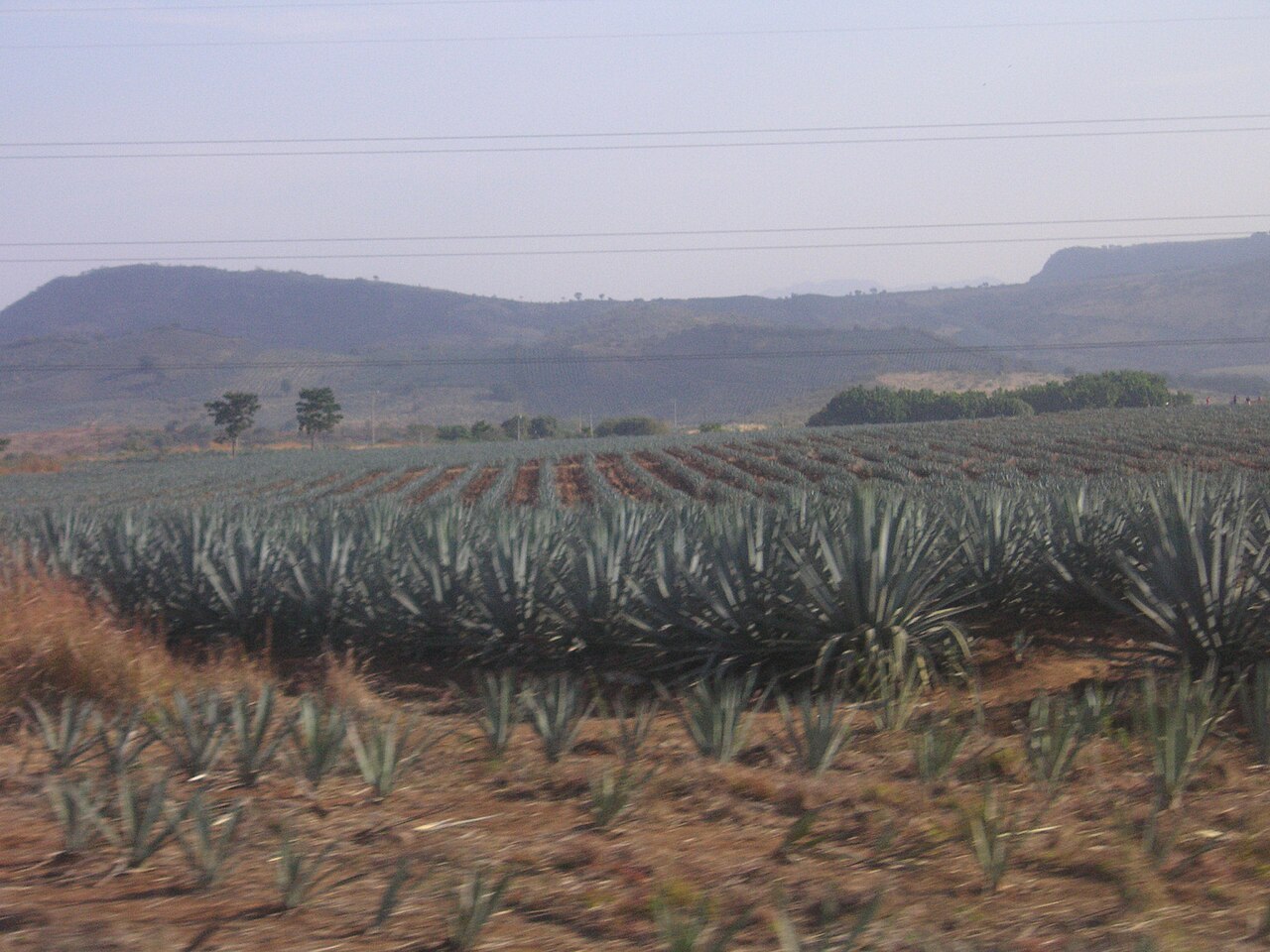
Blue Weber agave
Agave tequilana Weber var. azulBlue agave is the only agave permitted for tequila. The plant commonly spends five to eight years in the field before jimadores remove its leaves and harvest the sugar-rich heart for cooking.
“100% agave” tequila uses only blue-agave sugars; the broader tequila category must use at least 51% blue-agave sugars.Photo · Tobias Hesse / CC BY-SA 3.0Two Jalisco landscapes—and the wider denomination
Highlands and Valley are trade and terroir language, not separate classes in the tequila standard. Authorized municipalities also extend beyond Jalisco into Guanajuato, Michoacán, Nayarit and Tamaulipas.
- Los Altos · HighlandsProduction tradition
- Tequila ValleyProduction tradition
- Other authorized areasProtected origin
What changes in the glass
Blanco
Agave · citrus · pepperDirect from the still or briefly rested, keeping cooked-agave and production character most visible.
Reposado
Agave + gentle oakAt least two months in oak or holm-oak vessels, adding vanilla and spice without necessarily hiding the plant.
Añejo
Vanilla · dried fruit · oak spiceAt least one year in oak or holm-oak casks no larger than 600 L.
Extra añejo
Deep oak · cacao · cooked fruitAt least three years in direct contact with oak or holm oak.
From introductory to advanced
A four-pour route through agave & related spirits. “Advanced” means more intense or information-dense—not objectively better. Start with small pours, add water where useful, and compare slowly.
01Start 100% agave blanco tequila
Neat, or in a simple MargaritaUnaged tequila keeps cooked blue agave, citrus and pepper ahead of oak.
02Build Reposado tequila
NeatShort oak maturation makes it easy to compare plant character with vanilla, toast and softened texture.
03Explore Espadín mezcal
Small neat pourPit cooking, open fermentation and small-scale distillation add smoke, earth and savory plant detail.
04Advanced Ancestral mezcal or traditional sotol
Small neat pour at room temperatureVariable plants, vessels and distillation materials reward slow tasting and attention to producer-level method.
Side-by-side method
Compare agave & related spirits styles
Pick two subtypes and scan the five differences that matter most.
Blue Weber agave from authorized territory
One or more permitted agave species grown in certified municipalities.
Mature hearts are cooked, crushed, fermented and usually twice distilled
Often earth-roasted, crushed, open-fermented and batch distilled in copper.
Blanco is unaged or briefly rested
Joven is unaged
Mexican denomination made in authorized territory from Agave tequilana Weber blue variety.
Mexican denomination made in certified municipalities from permitted agave species.
Steam/oven cooking often gives clean cooked-agave, citrus and pepper
Often earth-roasted and small-scale, but smoke is only one note among agave, fruit, herbs.
Distillery map
Explore the production sites in the agave & related spirits chapter. Select a style to reduce the map, then choose a marker for its production story.
Tequila Fortaleza
Traditional tequila productionA reference point for mature blue agave, oven cooking, tahona crushing and copper pot distillation.
- cooked agave
- citrus
- pepper